Compartir
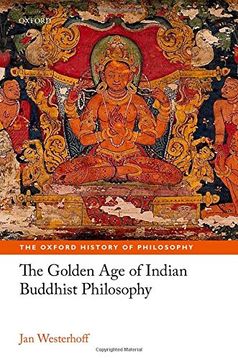
The Golden age of Indian Buddhist Philosophy in the First Millennium ce (The Oxford History of Philosophy) (en Inglés)
Jan Westerhoff (Autor)
·
Oxford University Press
· Tapa Dura
The Golden age of Indian Buddhist Philosophy in the First Millennium ce (The Oxford History of Philosophy) (en Inglés) - Jan Westerhoff
Más barato Libro Nuevo
Importado
Envío: 13 a 18 días háb.
$ 110.59$ 44.23
Más rápido Libro Nuevo
Origen: Estados Unidos
Envío: 7 a 9 días háb.
$ 72.44$ 68.18
Costos de importación incluídos en el precio ✅
Reseña del libro "The Golden age of Indian Buddhist Philosophy in the First Millennium ce (The Oxford History of Philosophy) (en Inglés)"
Jan Westerhoff unfolds the story of one of the richest episodes in the history of Indian thought, the development of Buddhist philosophy in the first millennium CE. He starts from the composition of the Abhidharma works before the beginning of the common era and continues up to the time of Dharmakirti in the sixth century. This period was characterized by the development of a variety of philosophical schools and approaches that have shaped Buddhist thought up to the present day: the scholasticism of the Abhidharma, the Madhyamaka's theory of emptiness, Yogacara idealism, and the logical and epistemological works of Dinnaga and Dharmakirti. The book attempts to describe the historical development of these schools in their intellectual and cultural context, with particular emphasis on three factors that shaped the development of Buddhist philosophical thought: the need to spell out the contents of canonical texts, the discourses of the historical Buddha and the Mahayana sutras; the desire to defend their positions by sophisticated arguments against criticisms from fellow Buddhists and from non-Buddhist thinkers of classical Indian philosophy; and the need to account for insights gained through the application of specific meditative techniques. While the main focus is the period up to the sixth century CE, Westerhoff also discusses some important thinkers who influenced Buddhist thought between this time and the decline of Buddhist scholastic philosophy in India at the beginning of the thirteenth century. His aim is that the historical presentation will also allow the reader to get a better systematic grasp of key Buddhist concepts such as non-self, suffering, reincarnation, karma, and nirvana.
- 0% (0)
- 0% (0)
- 0% (0)
- 0% (0)
- 0% (0)
Todos los libros de nuestro catálogo son Originales.
El libro está escrito en Inglés.
La encuadernación de esta edición es Tapa Dura.
✓ Producto agregado correctamente al carro, Ir a Pagar.