Venta Flash Hasta 60%  Ver más

Enviar a
FL
0
es
  • argentina
  • chile
  • colombia
  • españa
  • méxico
  • perú
  • estados unidos
  • internacional

Selecciona tu país

América

Europa

Resto del mundo

Idioma
esEspañolActual
enEnglish
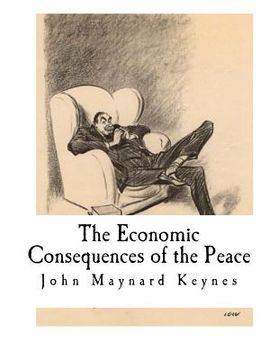
portada The Economic Consequences of the Peace (en Inglés)
Formato
Libro Físico
Editorial
Idioma
Inglés
N° páginas
104
Encuadernación
Tapa Blanda
Dimensiones
11.02x8.5x0.24 in
Peso
0.26 kg.
ISBN13
9781537266350

The Economic Consequences of the Peace (en Inglés)

John Maynard Keynes (Autor) · Createspace · Tapa Blanda

The Economic Consequences of the Peace (en Inglés) - John Maynard Keynes

Más barato Libro Nuevo Origen: Estados Unidos
Envío: 10 a 12 días háb.
$ 7.95$ 7.01
-12%
Más rápido Libro Nuevo Origen: Estados Unidos
Envío: 7 a 9 días háb.
$ 13.08$ 12.31
-6%
Libro Nuevo Más barato

Quedan más de 100 unidades

$ 7.01
Llega entre el 20 Nov y el 27 Nov a FL. Seleccionar ubicación

Reseña del libro "The Economic Consequences of the Peace (en Inglés)"

The Economic Consequences of the Peace by John Maynard Keynes... The Economic Consequences of the Peace (1919) is a book written and published by John Maynard Keynes. The book was released in late 1919 and became an immediate bestseller on both sides of the Atlantic: it was released in the US in 1920. The scathing sketches of Wilson, Lloyd George and Clemenceau proved to be very popular and the work established Keynes' reputation with the public as a leading economist. In six months, the book had sold 100,000 copies with translations into 12 languages. It restored Keynes' reputation with the Bloomsbury Group, which had been tarnished by his work for the Treasury during the war. Keynes returned to Cambridge to work as an economist, where he was regarded as the leading student of Alfred Marshall. Keynes left Cambridge University to work at the Treasury in 1915. He worked daily on financing the war effort during World War I. That disturbed many of the pacifist members of the Bloomsbury Group of which he was a member. Lytton Strachey sent him a note in 1916 asking Keynes why he was still working at the Treasury. Keynes quickly established a reputation as one of the Treasury's most able men and travelled to the Versailles Conference as an advisor to the British Government. In preparation for the conference, he argued that there should preferably be no reparations or that German reparations should be limited to
John Maynard Keynes
  (Autor)
Ver Página del Autor
John Maynard Keynes (Cambridge, 1883 – Sussex, 1946) fue un influyente economista británico cuyas ideas transformaron radicalmente la teoría y política económica del siglo XX. Educado en Eton y en la Universidad de Cambridge, fue miembro del Grupo de Bloomsbury y tuvo una destacada carrera como funcionario, académico y asesor del gobierno británico. Su teoría macroeconómica sentó las bases de lo que luego se conocería como economía keynesiana, defendiendo la intervención del Estado para estabilizar el ciclo económico.

Entre sus obras más reconocidas se encuentran Las consecuencias económicas de la paz (1919), Revisión del tratado (1922), Tratado sobre la moneda (1930) y Teoría general de la ocupación, el interés y el dinero (1936), esta última considerada su obra cumbre. Aunque no recibió premios formales en vida, su legado es inmenso y su influencia ha perdurado en la política económica de numerosos países, especialmente tras la Gran Depresión y la Segunda Guerra Mundial.
Ver más
Ver menos

Opiniones del libro

Preguntas frecuentes sobre el libro

Todos los libros de nuestro catálogo son Originales.
El libro está escrito en Inglés.
La encuadernación de esta edición es Tapa Blanda.

Preguntas y respuestas sobre el libro

¿Tienes una pregunta sobre el libro? Inicia sesión para poder agregar tu propia pregunta.

Opiniones sobre Buscalibre

Ver más opiniones de clientes